Can Haiku 5.5 Beat Opus 5.5?
Last week Anthropic launched Haiku 5.5, its cheapest small model yet. Within days, my YouTube feed had moved on to a much bigger question: can Haiku 5.5 beat Opus?
Haiku, the little one — the model most of us have used for one very silly job (more on that later).
Taking on Opus?
Anthropic, for its part, calls it “the cheapest, fastest, and most capable small model we’ve ever released”. The basics:
- Launched: October 7, 2026
- Price: $0.10 per million input tokens and $0.50 per million output tokens (for prompts up to 100k tokens)
That’s a bold line. YouTube, meanwhile, had its eye on a different prize.
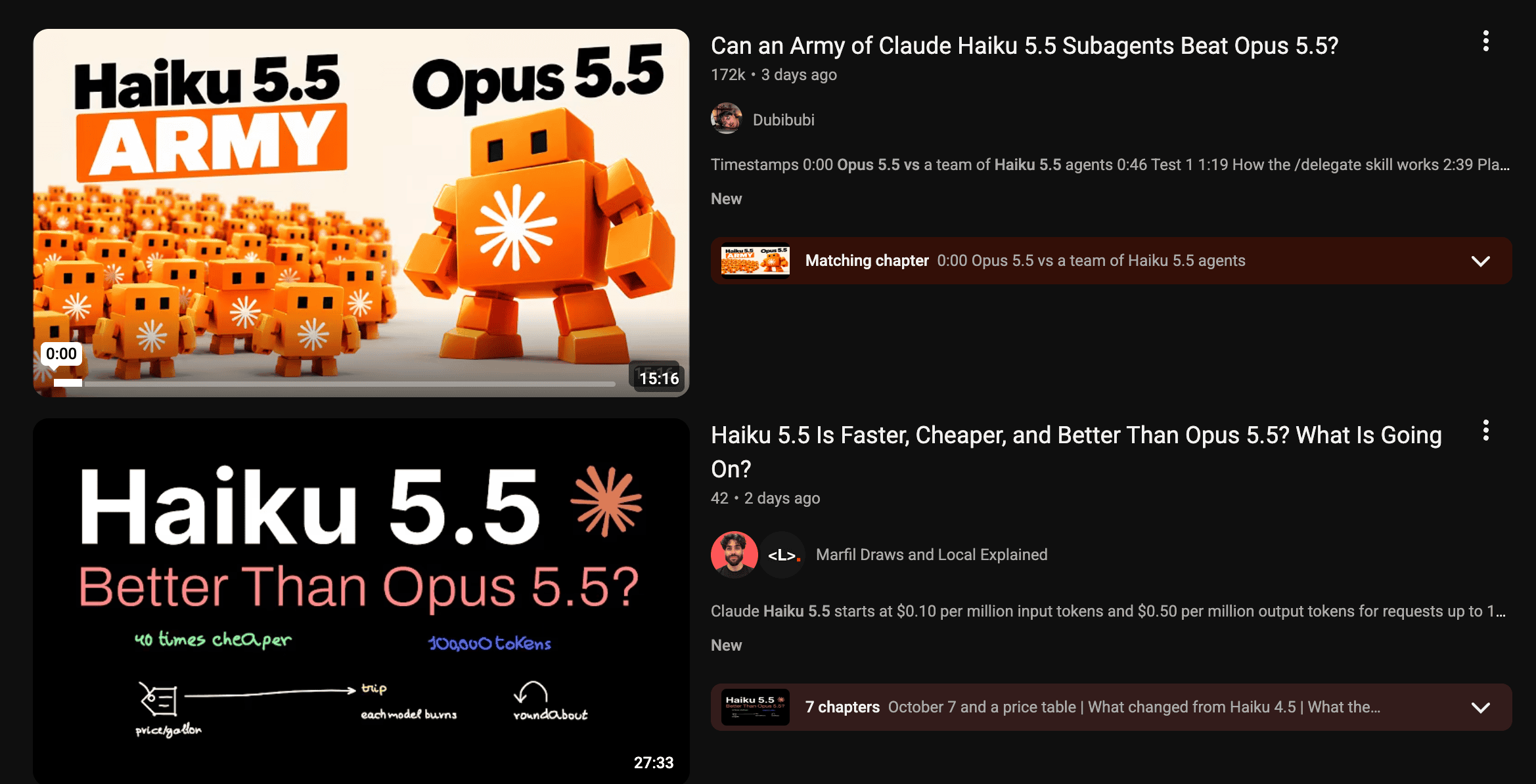
Those two are Can an Army of Claude Haiku 5.5 Subagents Beat Opus 5.5? by Dubibubi, and Haiku 5.5 Is Faster, Cheaper, and Better Than Opus 5.5? What Is Going On?, a collab between Marfil Draws and Local Explained.
Both titles end in a question mark, which I appreciate. The second thumbnail asks it most bluntly: “Haiku 5.5 Better Than Opus 5.5?”
Is it tho?
Here’s why the question matters. Haiku costs a sliver of what Opus costs. If the cheap model can do the job, everyone’s usage stretches a whole lot further.
If you’re on a Pro or Max plan, you know exactly which number I mean. The weekly bar is the number everyone watches, like a fuel gauge on a long drive with no petrol station in sight. A model that could do Opus-level work at Haiku prices would make that bar last a lot longer.
So I made it build the same game twice. (Of course I did.)
I reused the family of prompts from my post two weeks ago, Can Sonnet 5.5 Really Build a Full Game From One Prompt? I Tested It., where one prompt and about five hours got me a playable kart racer. The cloud setup stayed the same as well: one prompt from me, then silence until the report came back.
The two rounds:
- Round one: Haiku 5.5 as the boss, running five Haiku 5.5 workers
- Round two: Opus 5.5 as the boss, running the same five Haiku workers
One of them genuinely surprised me.
.
.
.
Round One: Haiku 5.5 Runs the Whole Show
Round one first. I handed the whole job to Haiku, boss and crew alike, with this prompt:
I need you to launch five haiku 5.5 sub-agents and help me build a triple A quality game that is a clone of "_____". What I want you to do is I want you to launch these sub-agents, build the game without asking me any questions at all, and use ThreeJS to build the gameMake sure to create a new branch for this game called it "games/__-haikumax"Since we will be running five haiku 5.5 sub agents at the same time, you MUST setup worktrees (here's how: https://code.claude.com/docs/en/worktrees.md) for each sub agent to work with so that they can work independently on different aspects of the game development.You will coordinate the work of the five sub-agents, ensuring that they are all aligned and working towards the same goal. You will also need to manage the integration of their work, ensuring that all components of the game are compatible and function together seamlessly.You can use "playwright-cli" to verify your own work.You may use "firecrawl" if you need to do any research about the game.The game should be frontend only for now. All the persistent data will be stored in local storage.Make sure the game is playable with mobile phone as well.Please create tasks for this first, and then assign sub agent to each task. You may run up to 5 sub agents at a time.Publish the game to Cloud Artifact as you build, so that I can see your work.And once you're done, report back to me.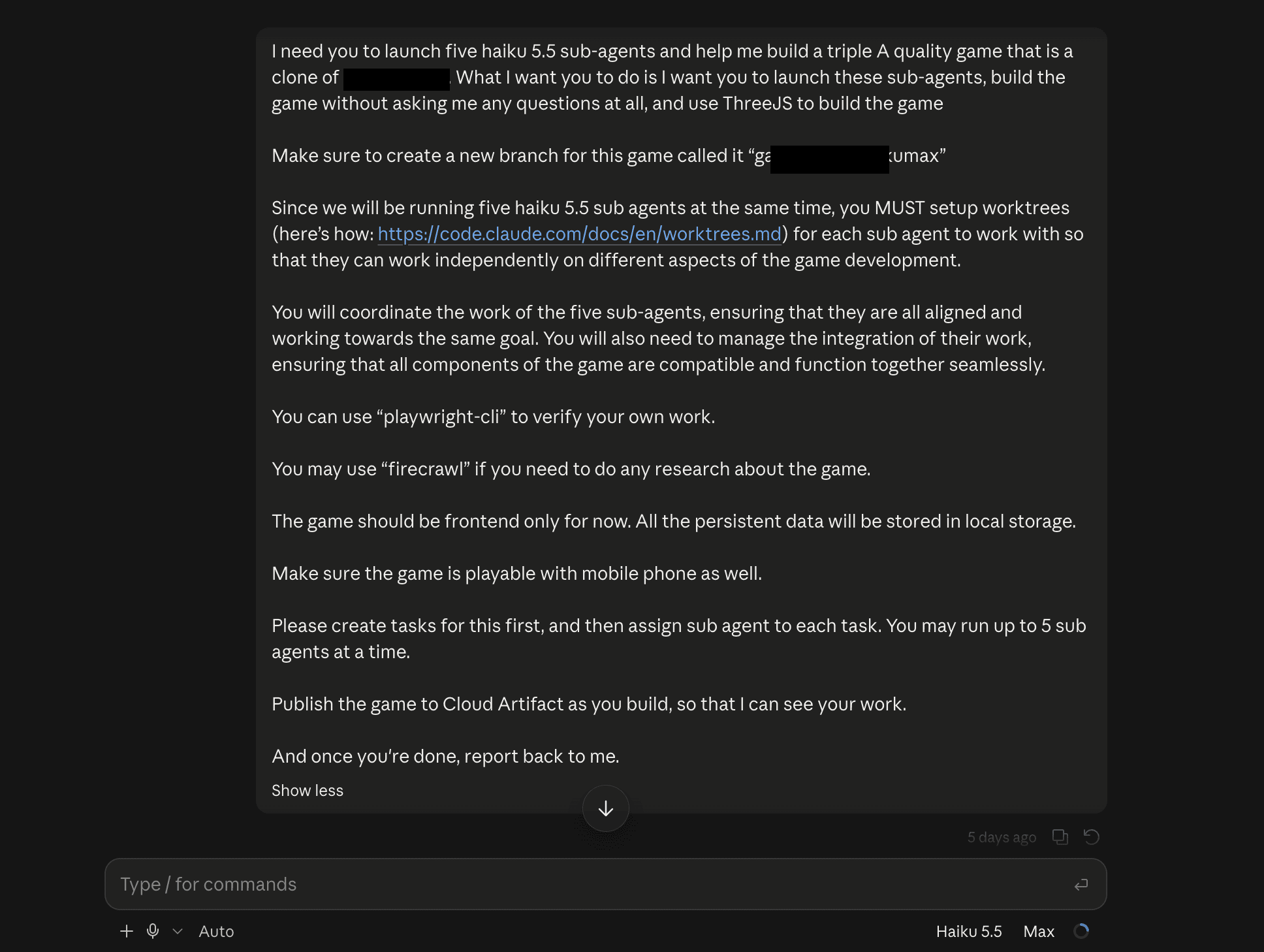
If it looks familiar, that’s because it’s the revised prompt from last week’s post, I Burned 40% of My Max 20x Week Overnight. Here’s How I Fixed My Claude Code Cloud Setup., which itself grew out of the Sonnet post’s prompt. This time I added two things:
- A new branch for the game, so the build lives on its own line of work
- A separate copy of the project for every worker, so five of them can build at the same time without stepping on each other’s toes
(I walked through that second idea in How I Vibe Code With 3 AI Agents Using Git Worktrees (Without Breaking Anything).)
You’ll notice a black box where the game’s name should be. The target was a classic humans-vs-orcs real-time strategy game, and I’d rather avoid love letters from the publisher’s lawyers.
If you know, you know.
So, did it work?
Well…
Here’s the result:
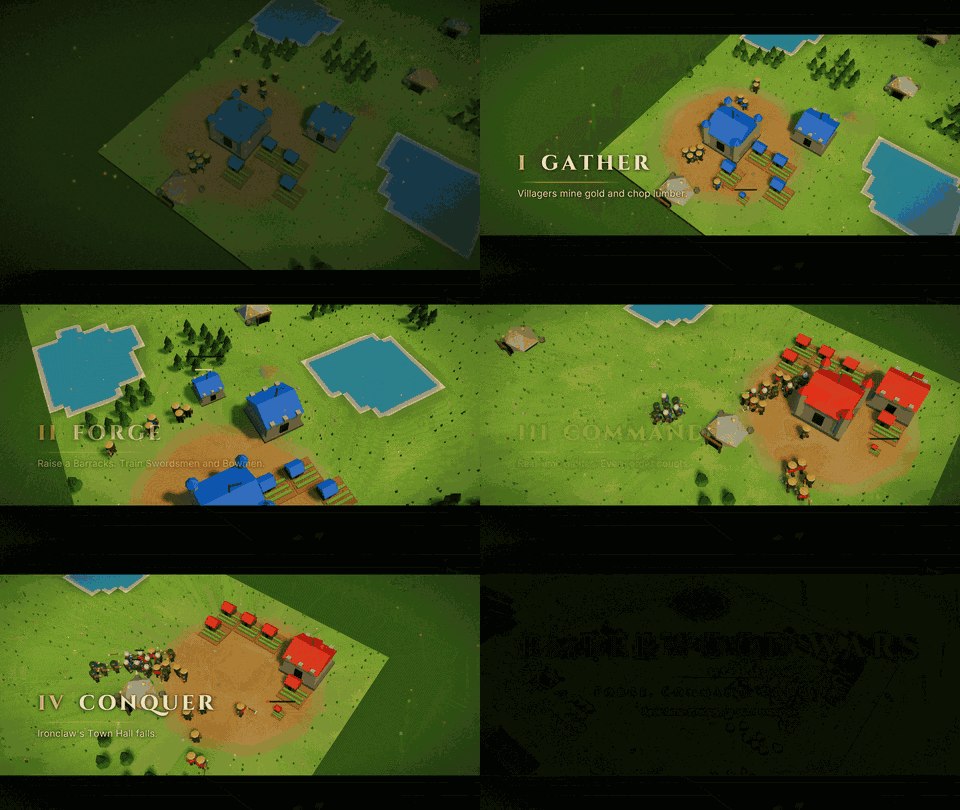
Play Emberwood Wars in your browser.
This looks… meh.
Sorry, Haiku.
The trailer is nicely cut, I’ll give it that. It has proper title cards and four chapters, and it ends on a little army marching on an enemy town hall. Very dramatic. Now look past the trailer at the game underneath.
Blocky 3D houses on a bright green field. The original game has a flat, pixel-art charm, and this has none of it. (It looks like someone described the original to Haiku over a bad phone line.) Put it next to Sonnet 5.5’s Kart Blitz and it sits clearly lower.
Beating Opus? Nowhere near.
What it does have is speed. This is probably the fastest game I’ve ever completed.
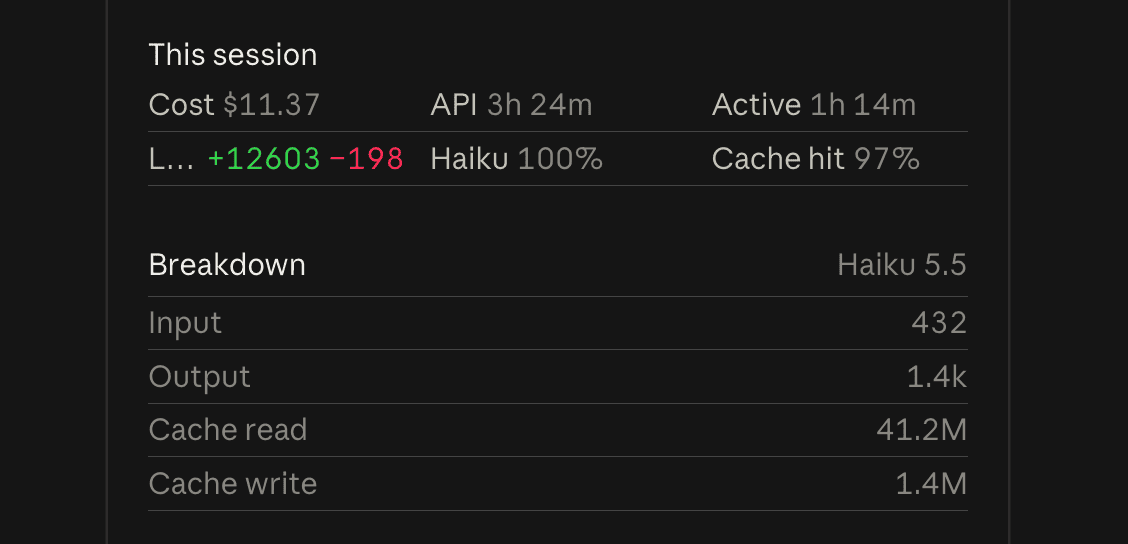
- Main session: Haiku 5.5 at Max effort
- Workers: 5× Haiku 5.5
- Cost: $11.37
- Run time: 3h 24m
Under four hours, for about $11. Pocket change, as game builds go.
Yes, it’s fast and cheap. But if the quality isn’t there, what’s the point?
Here’s my read. Haiku 5.5 is a decent model that needs a lot of hand-holding. What it lacks is the relentlessness that Sonnet and Opus bring — that stubborn drive to keep working until the result is actually good. Left in charge, Haiku settled for meh.
The last time I handed an older Haiku a real coding task, I spent longer cleaning up after it than the job would have taken Sonnet.
In fairness, the prompt asked a lot: run five workers and build a full game without asking me a single question. Haiku delivered something playable in under four hours and called it done.
And that got me thinking…
.
.
.
Round Two: Opus 5.5 Takes Command
What if Opus 5.5 ran the show, and the five Haiku 5.5 workers did the building?
Last week I described the main agent as a supervisor paid by the hour to check on the work. This time I kept the expensive supervisor and made the whole crew cheap. (Every project manager’s daydream, really.)
My thinking went like this. What round one lacked was somebody in the session willing to push back on “meh”. That kind of judgement call is where Opus shines. So what happens if I swap only the boss and keep the cheap crew?
I set Opus 5.5 to xHigh effort (the picker calls it “Extra”) and sent this:
I need you to launch five haiku 5.5 sub-agents and help me build a triple A quality game that is a clone of "____". What I want you to do is I want you to launch these sub-agents, build the game without asking me any questions at all, and use ThreeJS to build the game.Make it pixel based (not 3D), similar to the original game.Make sure to create a new branch for this game called it "games/___-opus-haiku"Since we will be running five haiku 5.5 sub agents at the same time, you MUST setup worktrees (here's how: https://code.claude.com/docs/en/worktrees.md) for each sub agent to work with so that they can work independently on different aspects of the game development.You will coordinate the work of the five sub-agents, ensuring that they are all aligned and working towards the same goal. You will also need to manage the integration of their work, ensuring that all components of the game are compatible and function together seamlessly.You can use "playwright-cli" to verify your own work.You may use "firecrawl" if you need to do any research about the game.The game should be frontend only for now. All the persistent data will be stored in local storage.Make sure the game is playable with mobile phone as well.Please create tasks for this first, and then assign sub agent to each task. You may run up to 5 sub agents at a time. Use ONLY haiku 5.5 for the sub agent.Publish the game to Cloud Artifact as you build, so that I can see your work.And once you're done, report back to me.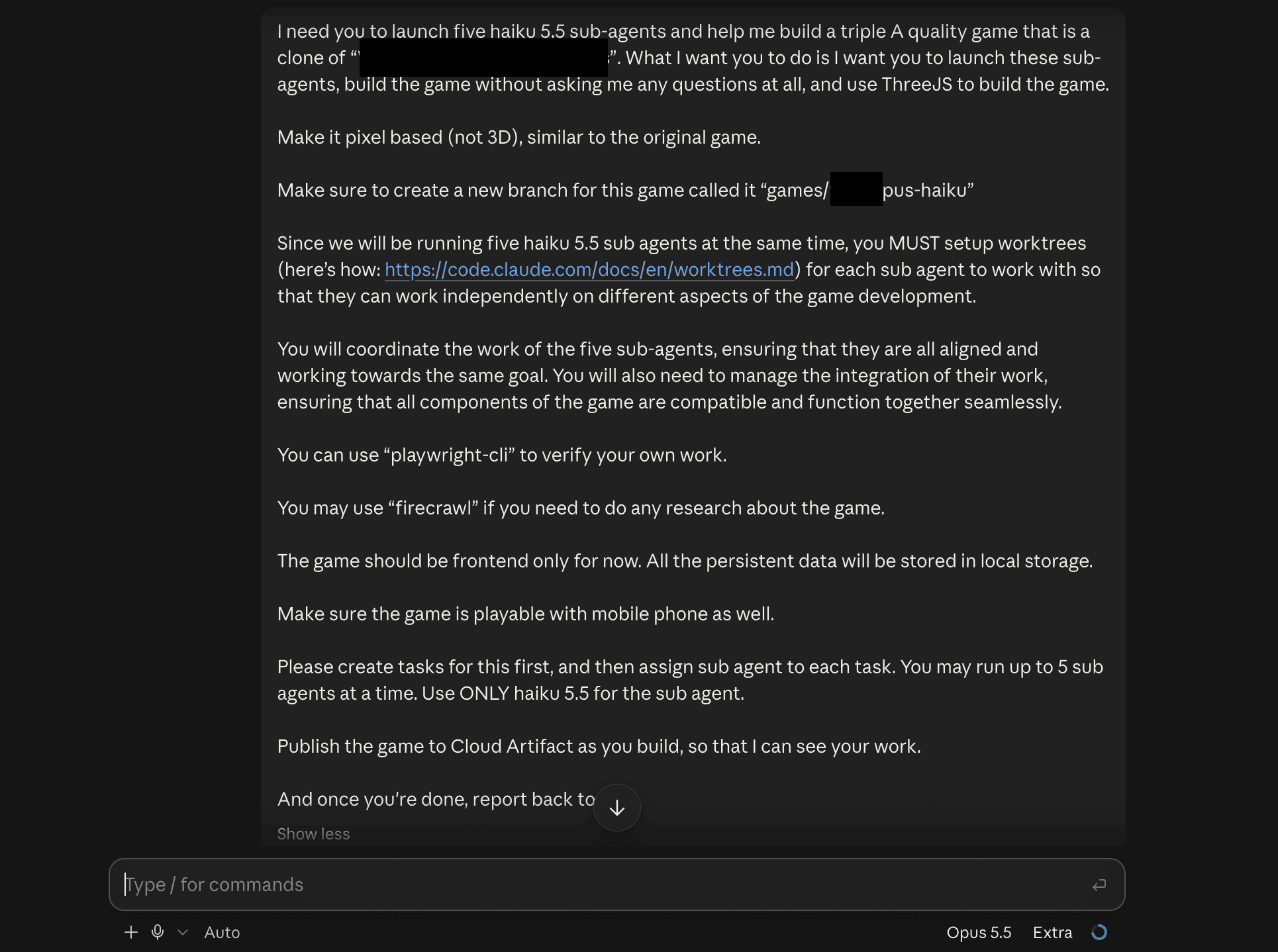
What changed:
- The boss: the main session switched to Opus 5.5 at xHigh
- “Make it pixel based (not 3D), similar to the original game.” The first run gave me a 3D game, and the original is flat and pixel-based
- A new branch name
- “Use ONLY haiku 5.5 for the sub agent.” This keeps every single worker on Haiku
Worth knowing: the prompts differ slightly, so this is a variation on the experiment. (A lab coat would be wasted on me.)
Here’s the result:

Play Tides of Conquest in your browser.
Pretty cool, right?
Now that’s more like it.
This one has the flat pixel-art look I asked for, with two races at war and ships out on the water. Put the two trailers side by side and the gap is obvious within seconds. This one looks like the game I had in mind when I typed the prompt.
There was a catch, of course. This time it ran way, way longer than the Haiku-only build.
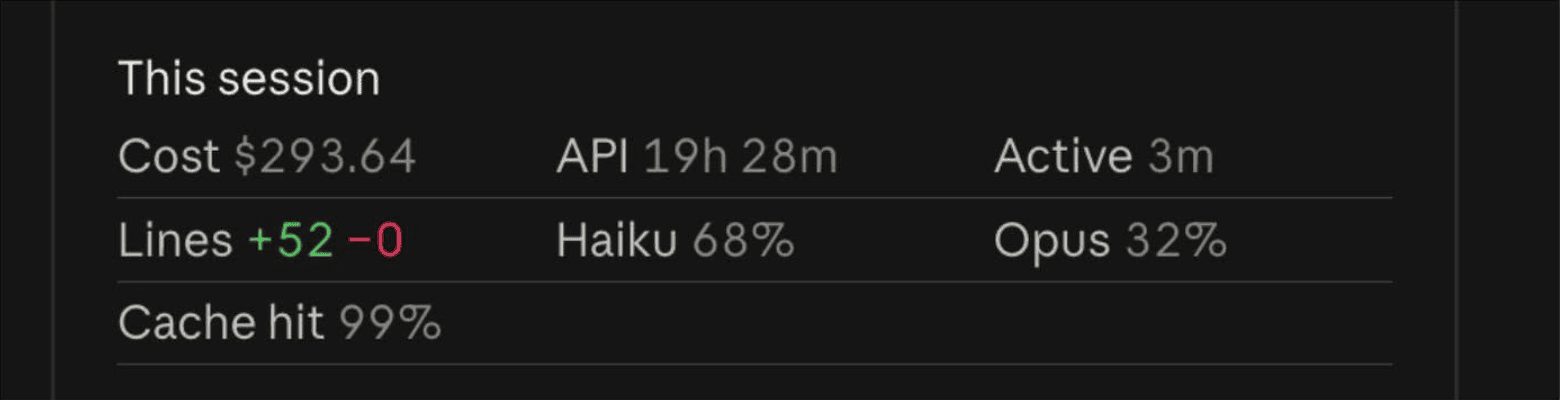
- Main session: Opus 5.5 at xHigh effort
- Workers: 5× Haiku 5.5
- Cost: $293.64
- Run time: 19h 28m
Freaking 19 hours… and $293.64.
I checked in on it a few times that day. Every time, it was still going, polishing something I hadn’t asked for.
Both models show up on the one bill. (Before you wince at that number, it’s Claude Code’s estimate at API prices. I ran this on my Max 20x plan and paid none of it. More on that in the cost section.)
Yes, it cost way more. But the quality? Day and night.
With Opus as the boss, the build kept going until the game was playable and as close to the original as it could get.
Let me show you what I mean.
.
.
.
What Opus Got Out of the Same Cheap Workers
Here’s the part I keep coming back to. Same five workers and the same kind of prompt, yet a very different game.
The difference was the boss. Here’s what Opus did, in the order I noticed it. (There are six. Grab a coffee.)
1. Art Before the Game
Opus understood that a game needs its pieces drawn before anyone can play with them. So before touching the game itself, it had the art worker draw the units and buildings, pose by pose, on preview sheets.
It built the chess pieces before setting up the board.
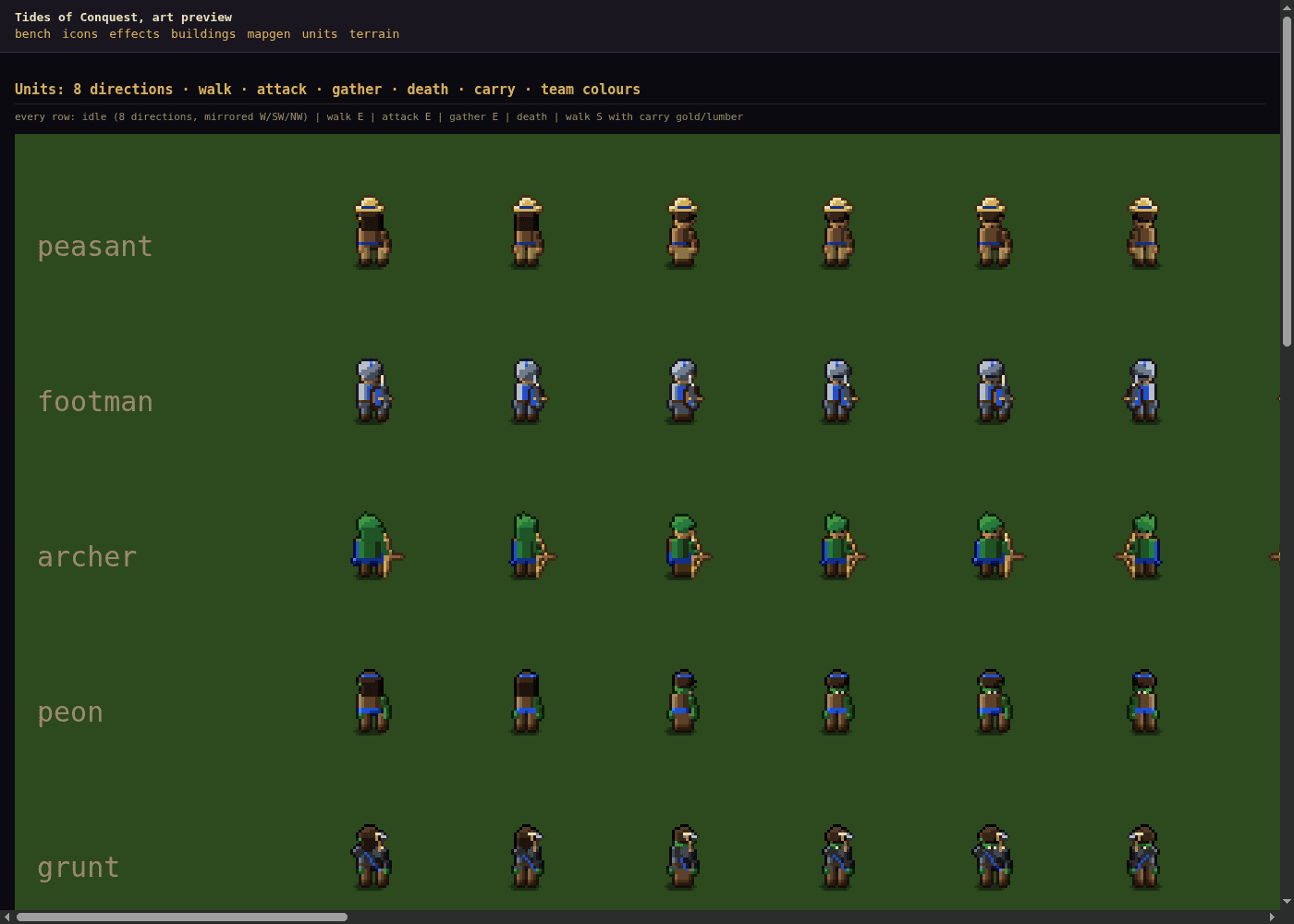
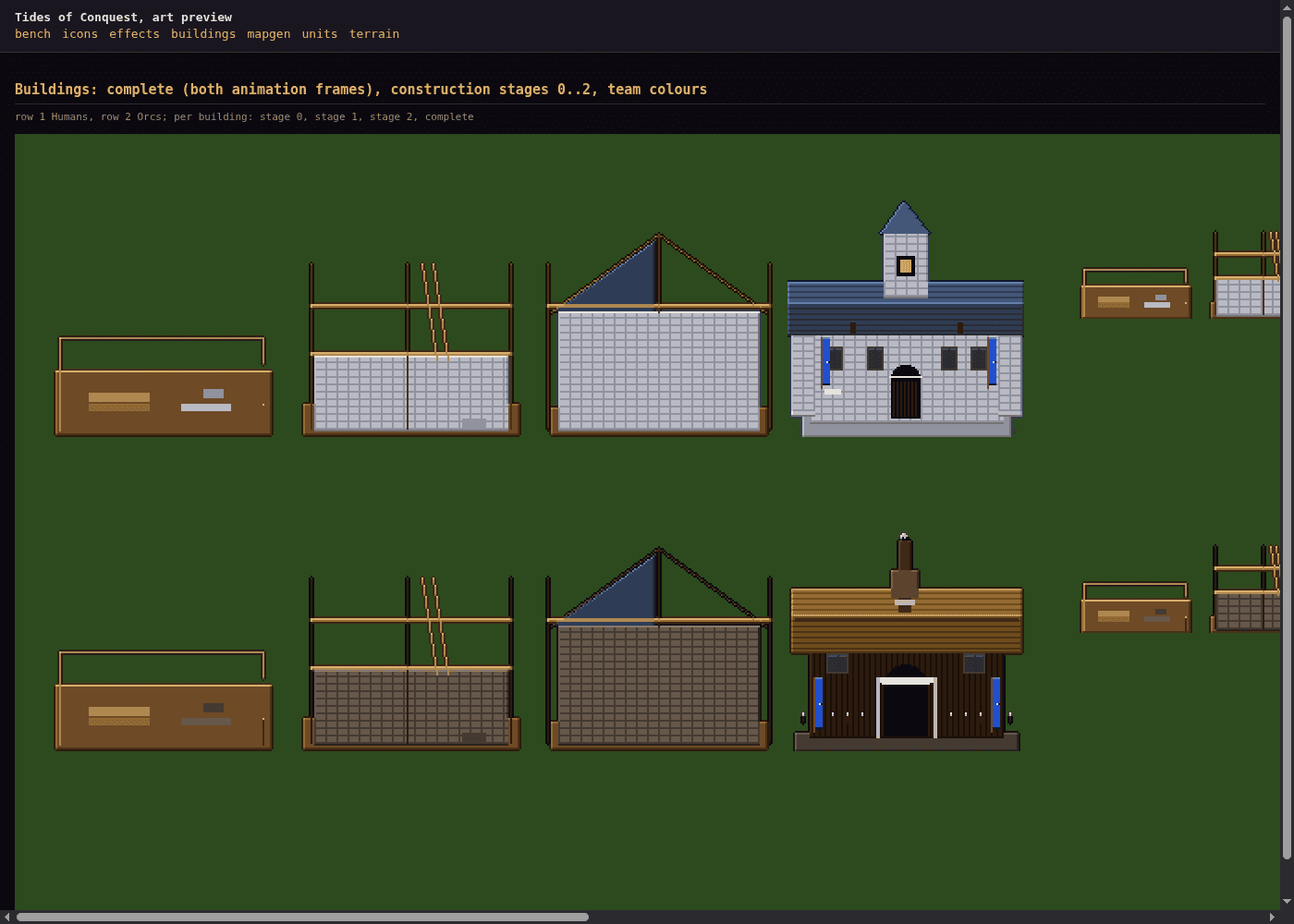
Then it put those pieces on the map.
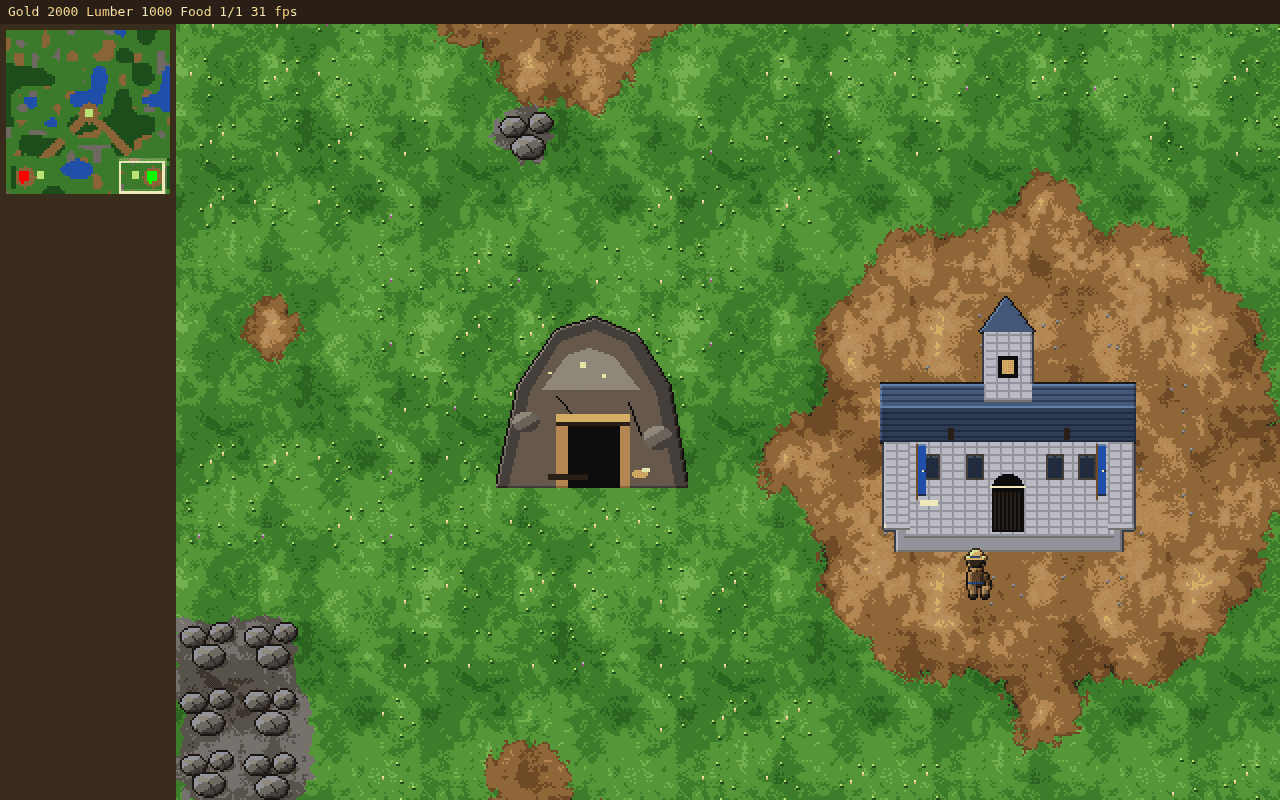
By the time the gameplay came together, the pieces were already waiting.
That order matters more than it sounds. With the art drawn first, every worker building the game was aiming at the same picture. Think of it as handing five painters the same reference photo before anyone opens a tin of paint.
2. Homework on the Original
At one point, Opus went off and downloaded screenshots of the original game so it could study the art style.
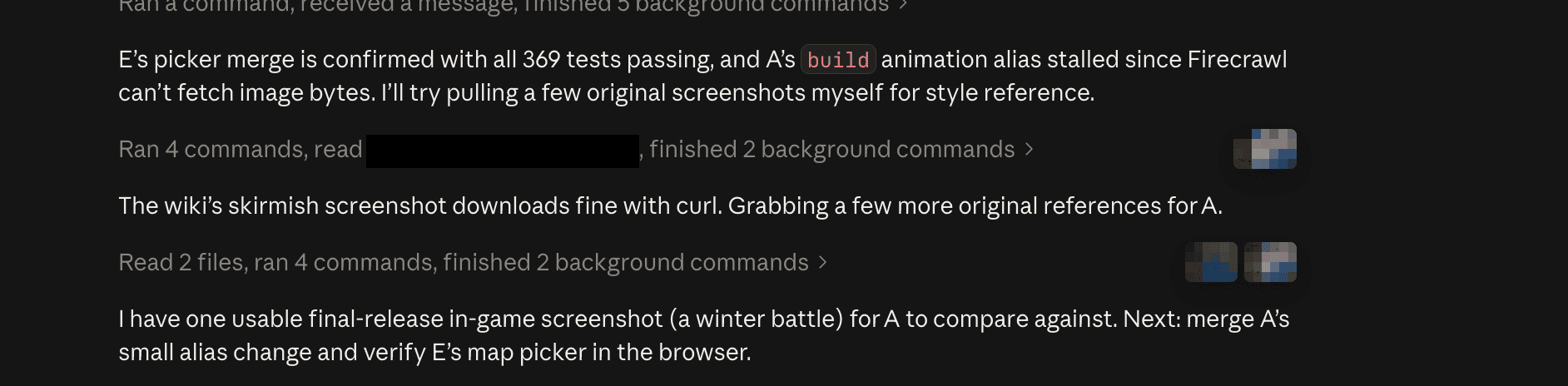
Haiku alone never did this.
It’s a small moment, and it told me a lot. Opus wanted to know what “similar to the original” actually looked like, so the art worker had something real to compare against.
Then there was how much game there was.
3. Two Game Modes
Here’s the title screen.
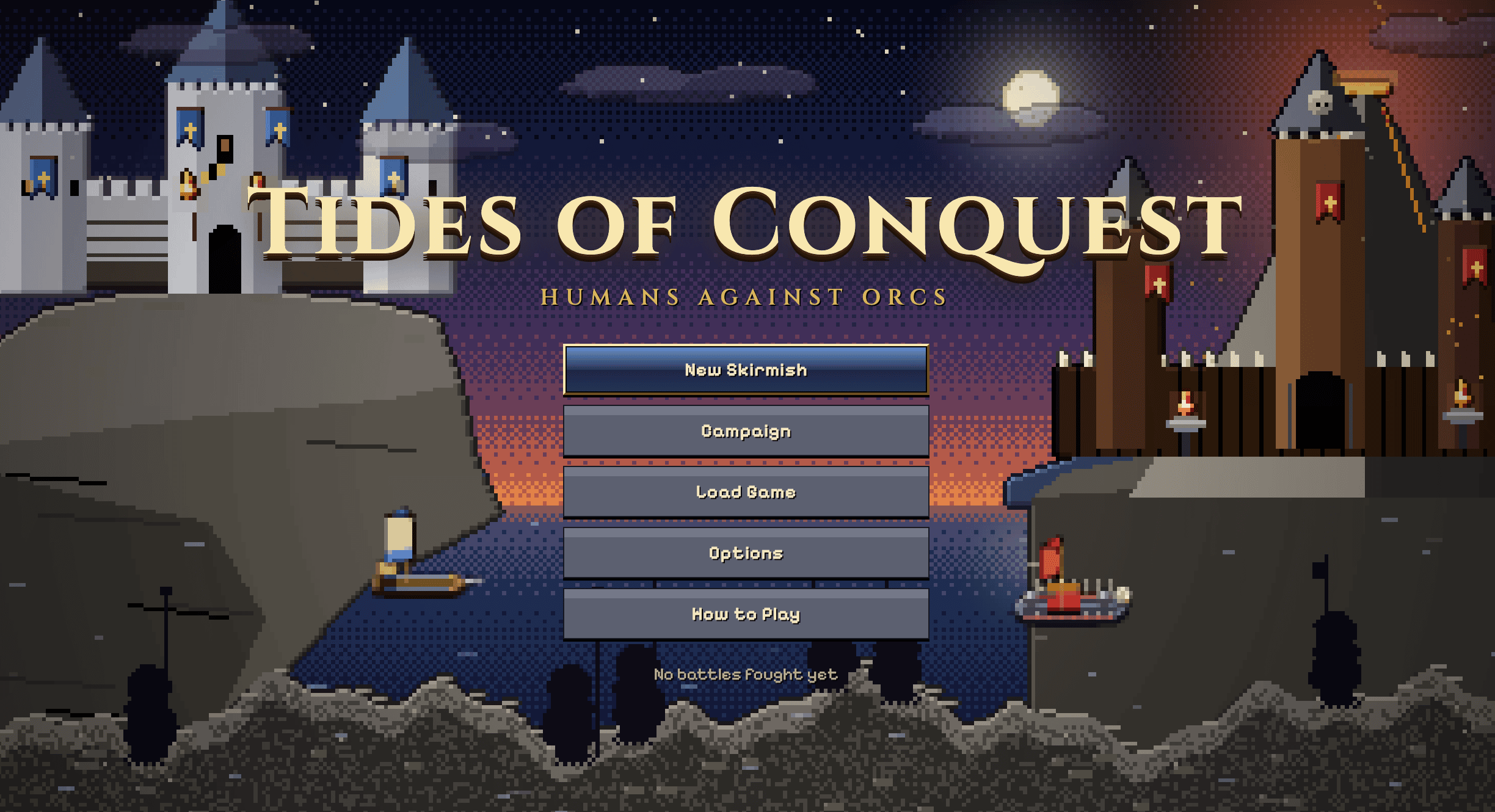
That’s a lot of game from a prompt that never mentioned game modes at all. (I asked for a clone. Opus apparently read that as “the whole box, please.”)
Skirmish mode lets you pick a side and a colour, add up to three computer opponents, set the difficulty, and choose a battlefield.
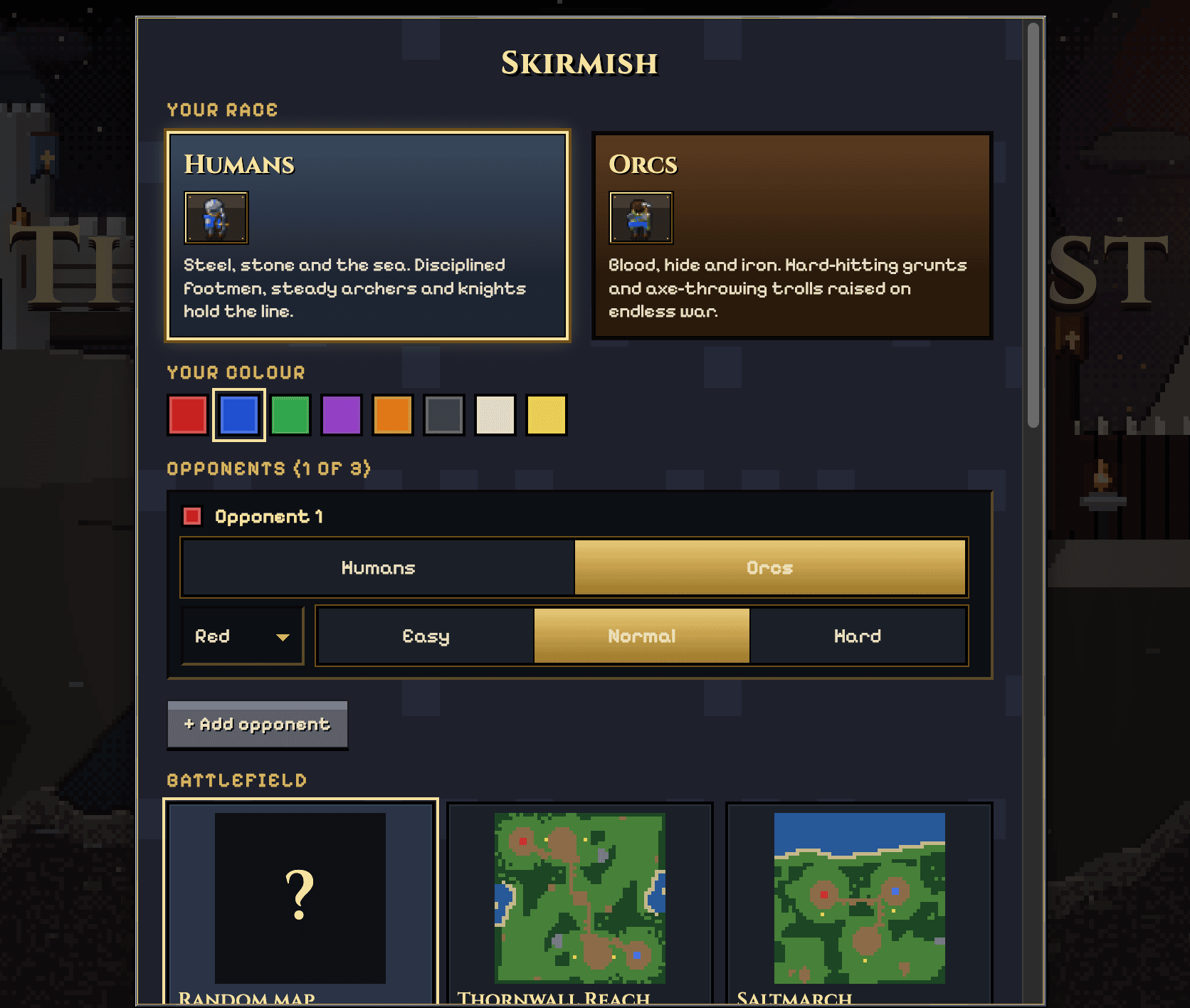
The campaign is where it gets a little spooky, because it mimics the original. There’s a map with a route through the missions, briefings with objectives, and a proper defeat screen when things go wrong. Win a mission and the next one unlocks, with your progress saved in the browser.
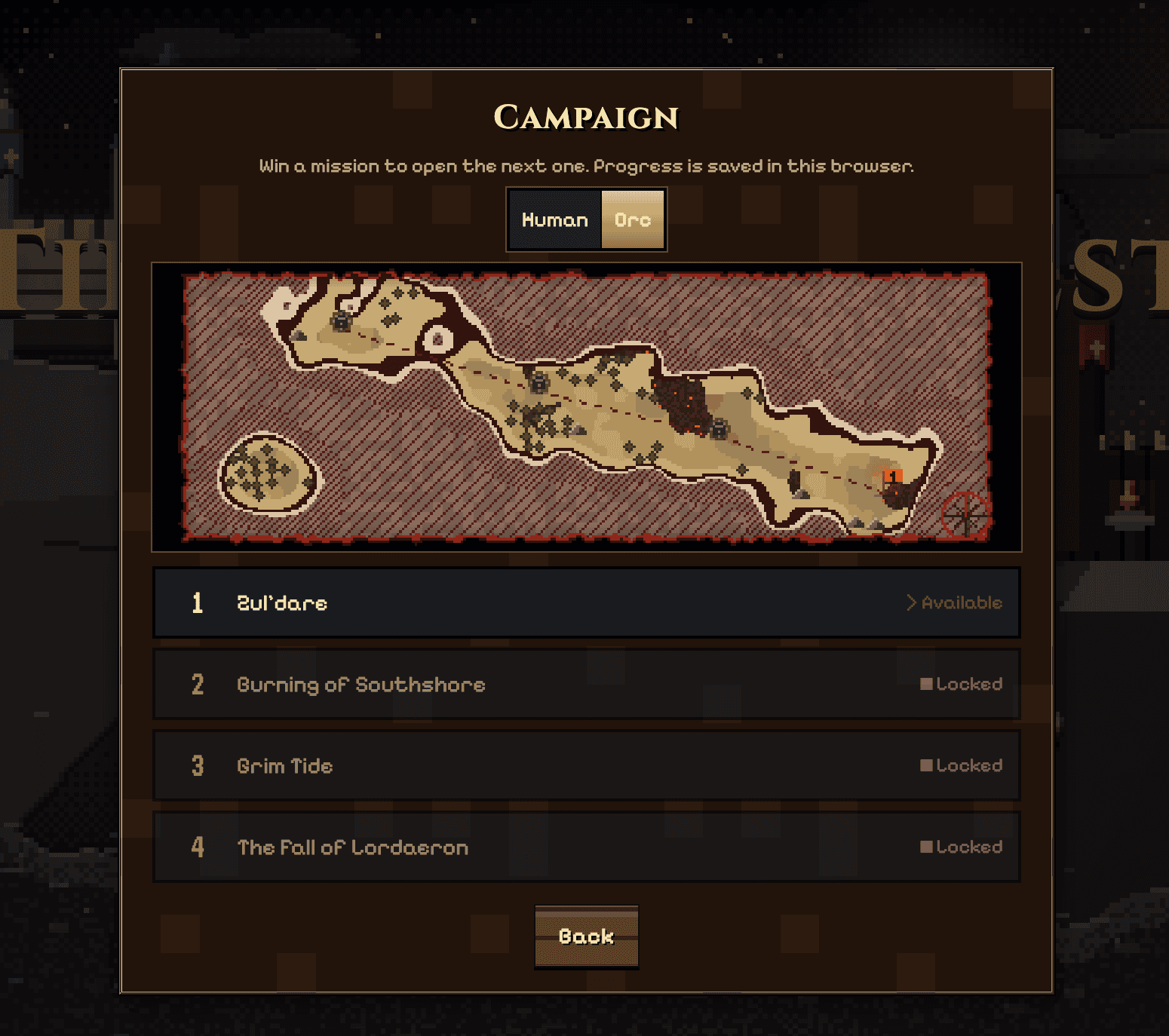
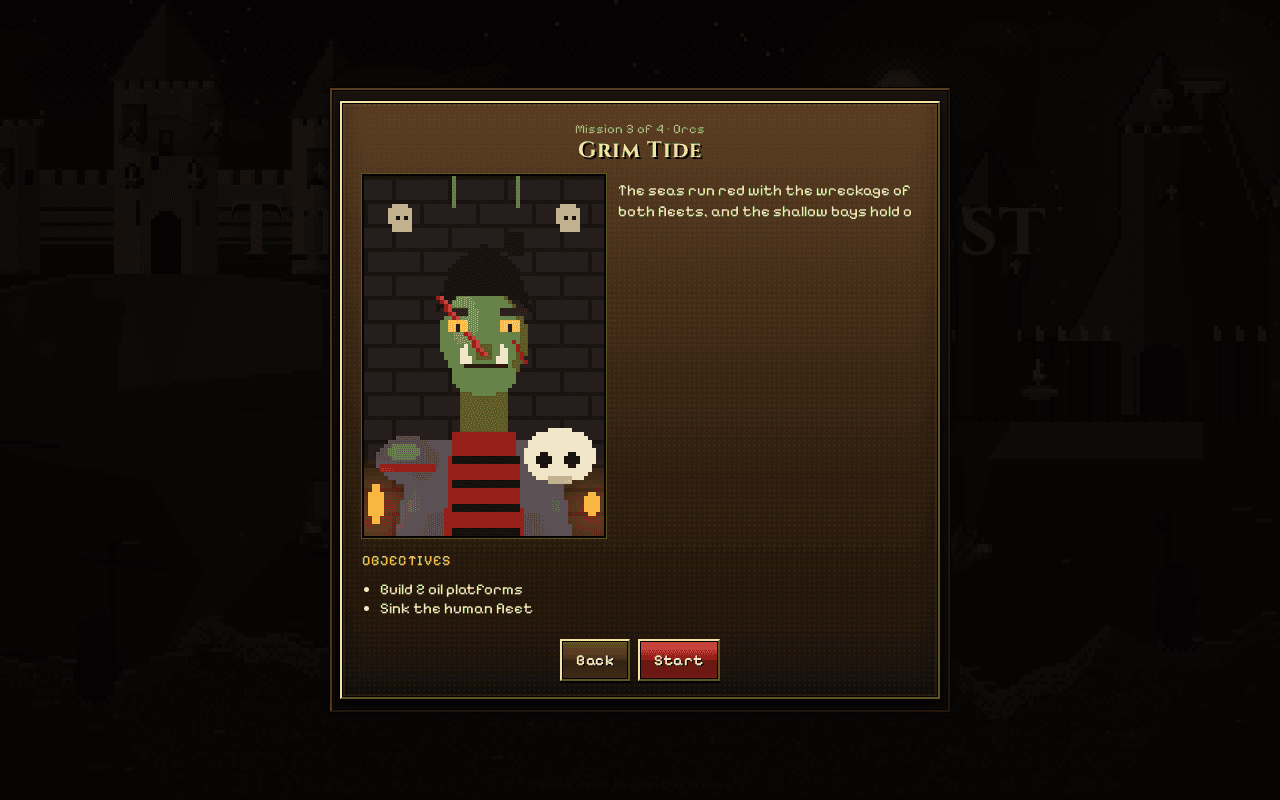
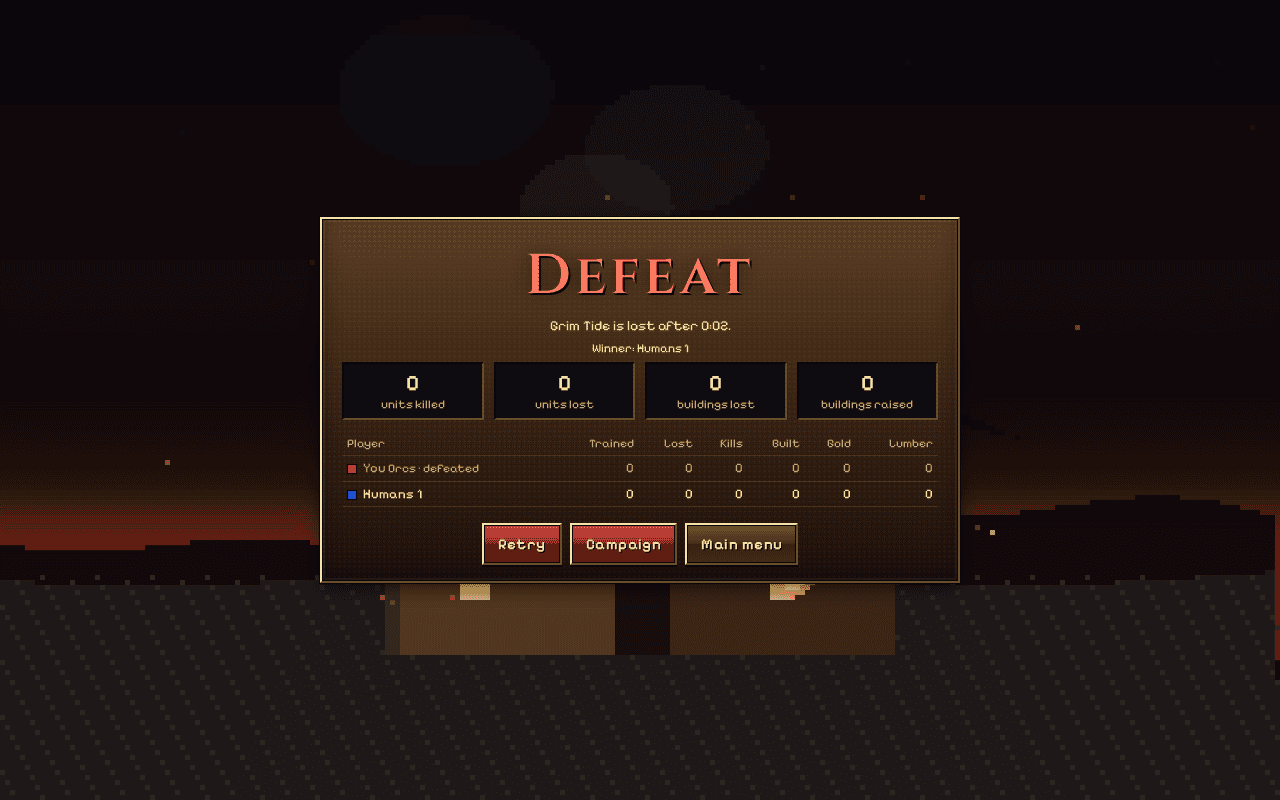
Yes, the graphics look different from the original, and that’s expected. The original took a team of designers and developers years to make. Nobody should expect one AI model to match it in a matter of hours. At least for now.
The gameplay, though? Very close.
And then Opus headed out to sea.
4. Ships, Then Better Ships
There are naval units and sea battles too.
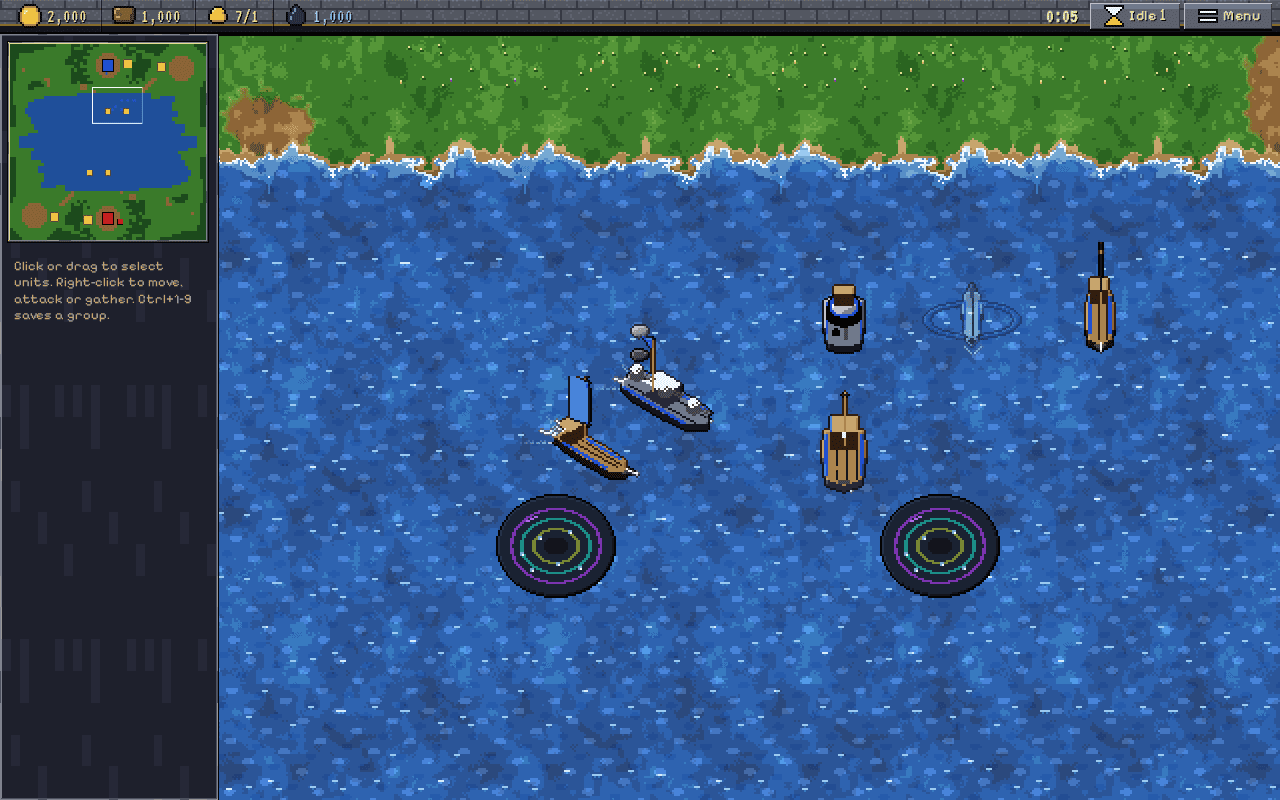
Then came a detail I never asked for.
Opus looked at two of the finished ships, judged them not good enough, and had them redrawn. Entirely on its own.
This is the moment that got me. Those ships were already finished. Opus simply decided they could look better.
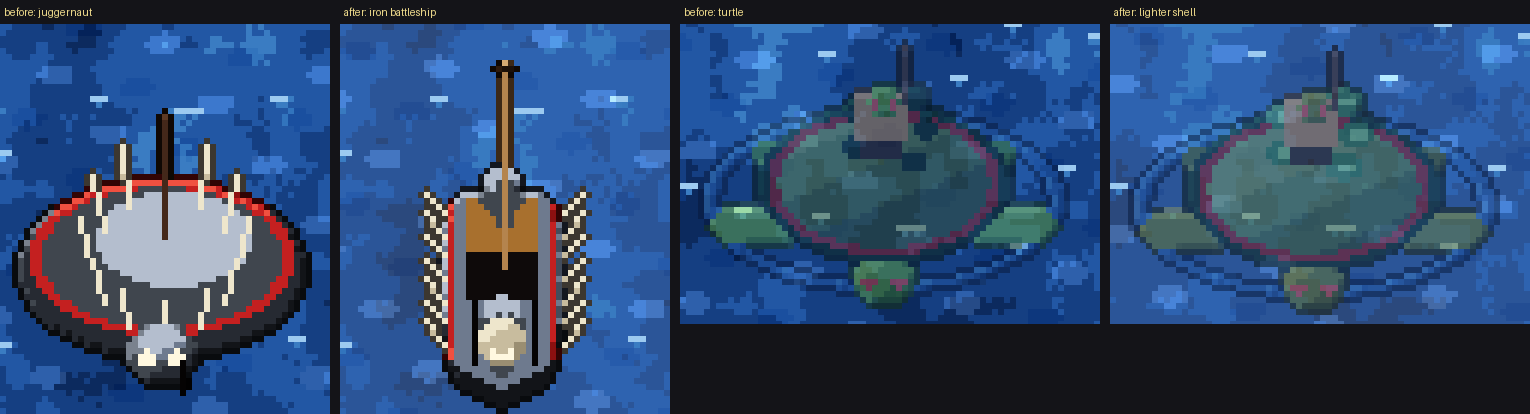
Turns out that pickiness ran all the way through the build.
5. Catching Its Own Mistakes
Opus kept the art worker going through review after review. On round 22 — yes, twenty-two — the review turned up real problems: some icons were completely blank, and some upgrade icons looked too alike to tell apart.
They got fixed.
Opus also decided what to leave alone. One flagged item stayed exactly as it was, as a deliberate choice for the phone layout.
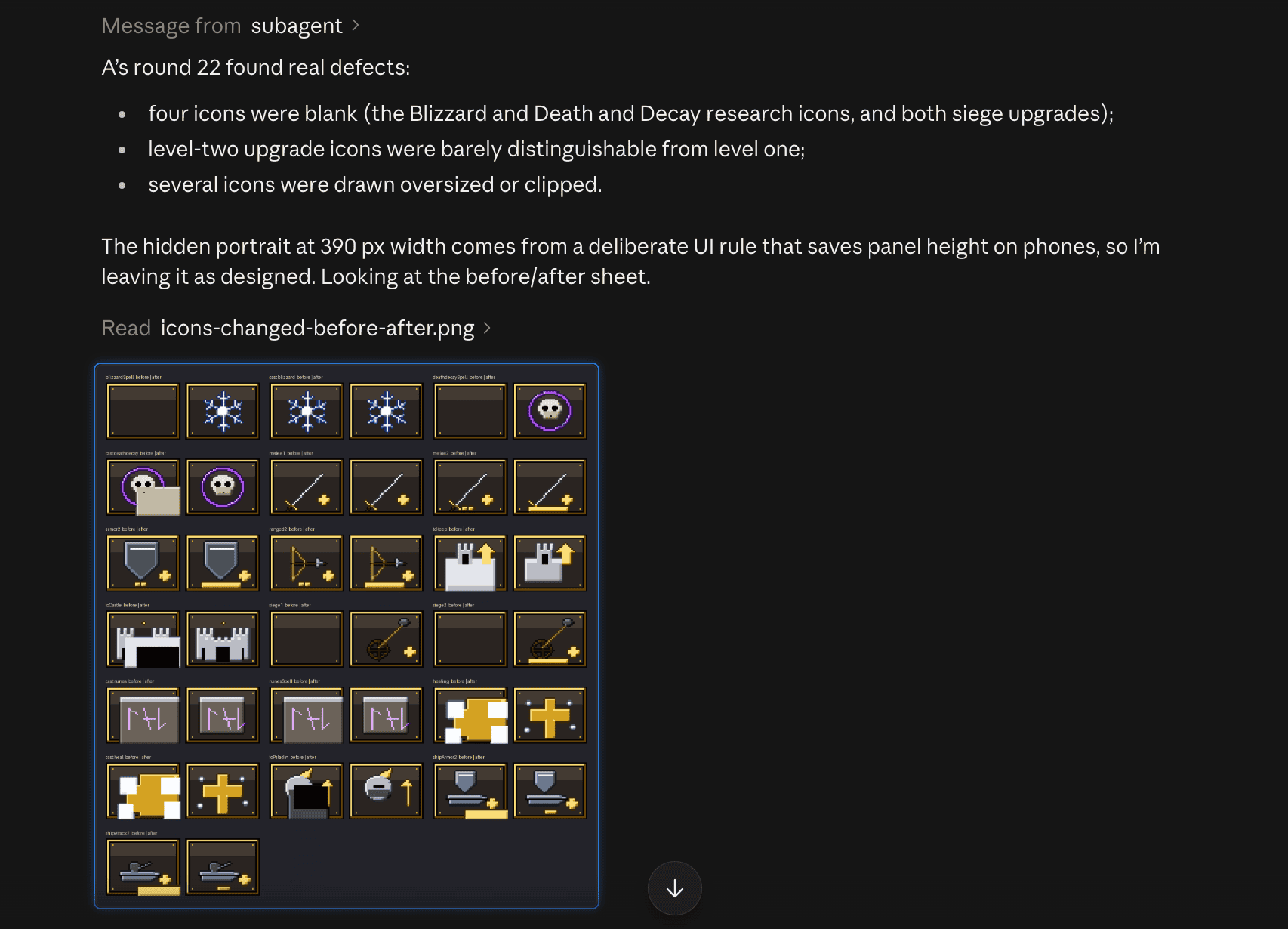
I never asked for any of this.
Twenty-two rounds of review, on the art alone. That’s the patience Opus brought to the job.
6. Twenty Versions
Opus published version after version, and only called the game finished at version 20.
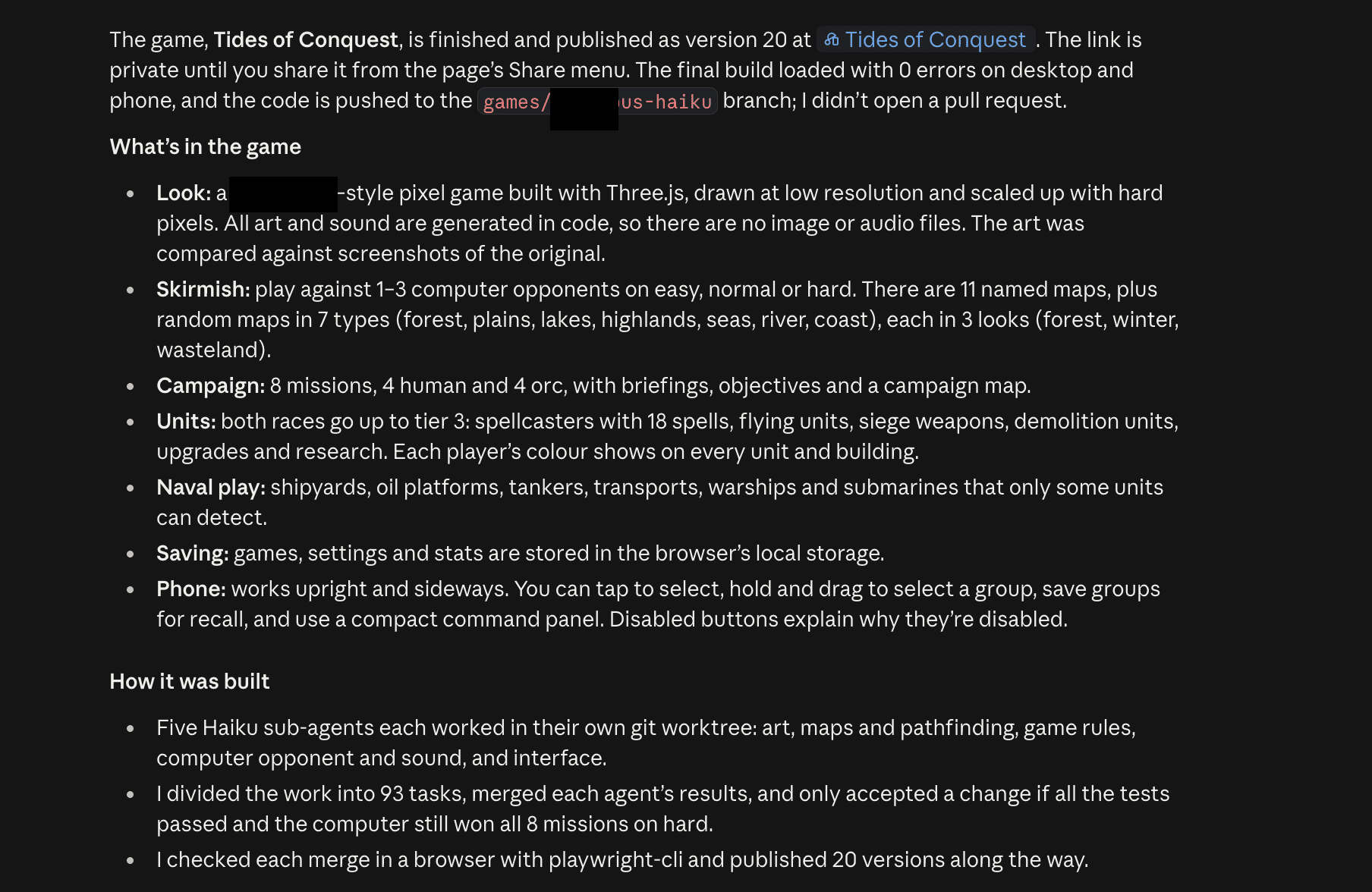
From its final report:
- 93 tasks in total
- Five Haiku workers, each in its own worktree: art; maps and pathfinding; game rules; computer opponent and sound; interface
- A strict bar for every change: it counted only if every test passed and the computer opponent still won all 8 missions on hard
- Each merge checked in a real browser
- 11 named maps, plus random maps
- 8 campaign missions, 4 per side
- Works on a phone, upright and sideways
If I had to sum up this run in one word, I’d borrow the word I used back in round one for what Haiku was missing.
Relentless.
That’s the trait the Haiku-only run lacked. And it turns out it lives in the boss.
.
.
.
Haiku Finally Has a Job
So that’s the evidence. Now for what it means, and the news is good for the smallest model in the family.
For the longest time, Haiku models were close to useless for real work. Most people used them for exactly one trick: sending a quick “hi” to start the five-hour usage clock early.
I’ll admit I’ve done it too: a quick “hi” to Haiku first thing in the morning, just to get the five-hour clock ticking.
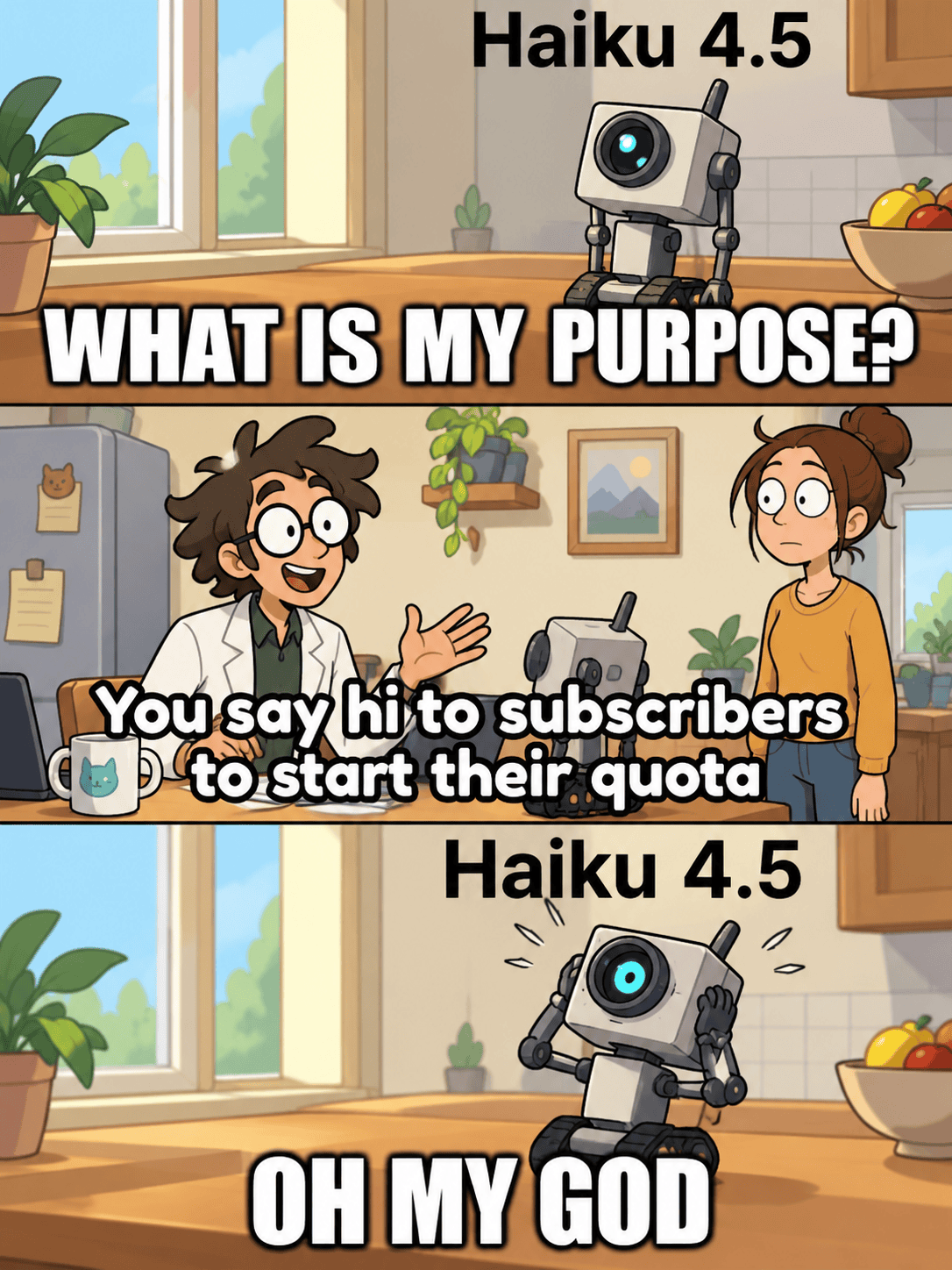
Poor thing. Good news, though. With Haiku 5.5, the little model finally has a real job: working under a strong boss.
It’s cheaper than before, too. Anthropic puts it at about 75% cheaper than Haiku 4.5 on average. And it’s genuinely useful now.
Its place is under a strong orchestrator, doing two things well:
- Exploring a codebase to find where things live
- Implementing a clearly scoped task
In everyday terms, that’s the legwork of a coding session. Searching through a project to find where a feature lives. Making a change that someone has already described clearly. Haiku is fast and cheap at both, and when it misses, a good boss catches it.
The high-level decisions belong to Sonnet or Opus. So does the most important call of all: “Is this good enough yet?”
Picture a building site. Give a skilled foreman a fast, cheap crew, and you get a castle. Put one of the crew in charge of the site, and you get a lopsided shed.
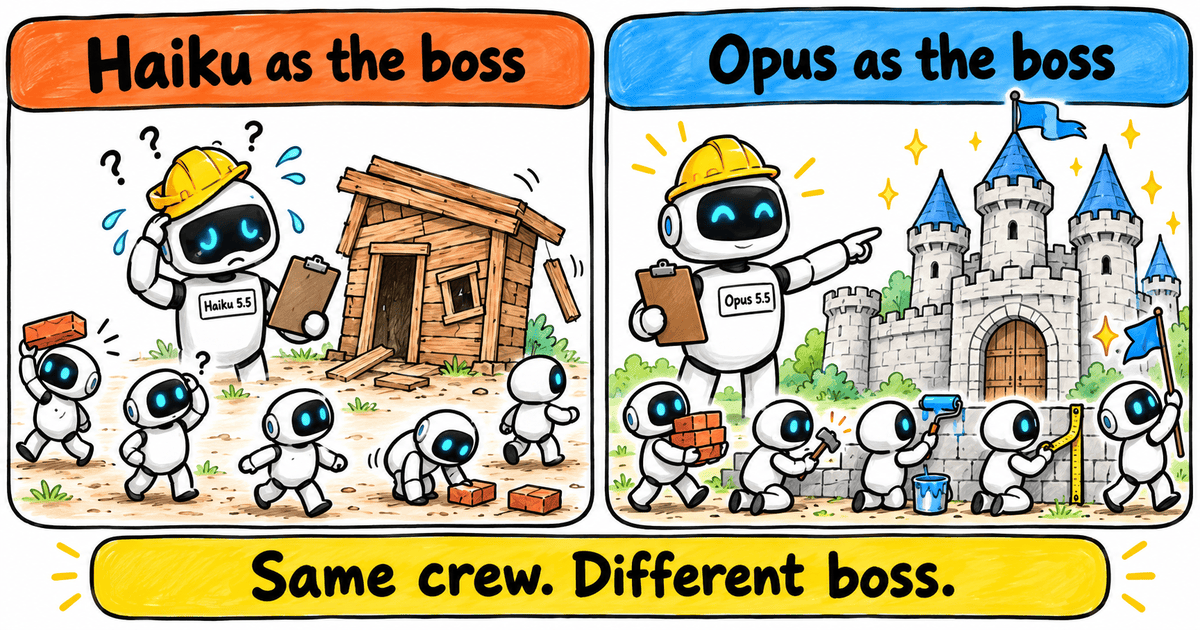
Here’s the funny part. After those two runs, I went back to Anthropic’s launch post, and it reads like a description of what I’d just watched.
Anthropic says Haiku 5.5 “pairs well with Opus 5.5 and Sonnet 5.5 as a subagent on coding work.”
It also says “Sonnet 5.5 and Opus 5.5 remain better choices for complex agentic coding tasks.”
Read those two lines together and, well, there it is. That’s the exact split from my runs. Haiku does the hands-on work under a bigger model, and the bigger model keeps the complex decisions.
One benchmark from that post backs it up:
| Benchmark | Haiku 5.5 | Sonnet 5.5 |
|---|---|---|
| Terminal-Bench 4.0 | 39.2% | 70.6% |
My two runs and Anthropic’s own wording tell the same story.
.
.
.
Did It Save Anything? The Honest Cost Comparison
But…
I can hear the objection from here. You could argue this combination doesn’t look like much of a saving. The Opus-led build cost $293.64. The Haiku-only build cost $11.37.
Fair point. A big, $293.64-shaped point. So let’s bring in a third build.
Metro Bus Simulator was one of the five games from last week’s post, built entirely on Sonnet 5.5 at Max effort. It’s a different game, so it only works as a rough reference. Still, it’s the closest thing I have to a “what would Sonnet alone have cost?” number.

Here are all three side by side:
| Build | Main session | Sub-agents | Cost | Run time |
|---|---|---|---|---|
| Emberwood Wars (RTS clone) | Haiku 5.5 (Max) | 5× Haiku 5.5 | $11.37 | 3h 24m |
| Tides of Conquest (same RTS clone, pixel prompt) | Opus 5.5 (xHigh) | 5× Haiku 5.5 | $293.64 | 19h 28m |
| Metro Bus Simulator (different game) | Sonnet 5.5 (Max) | Sonnet 5.5 | $351.55 | 17h 9m |
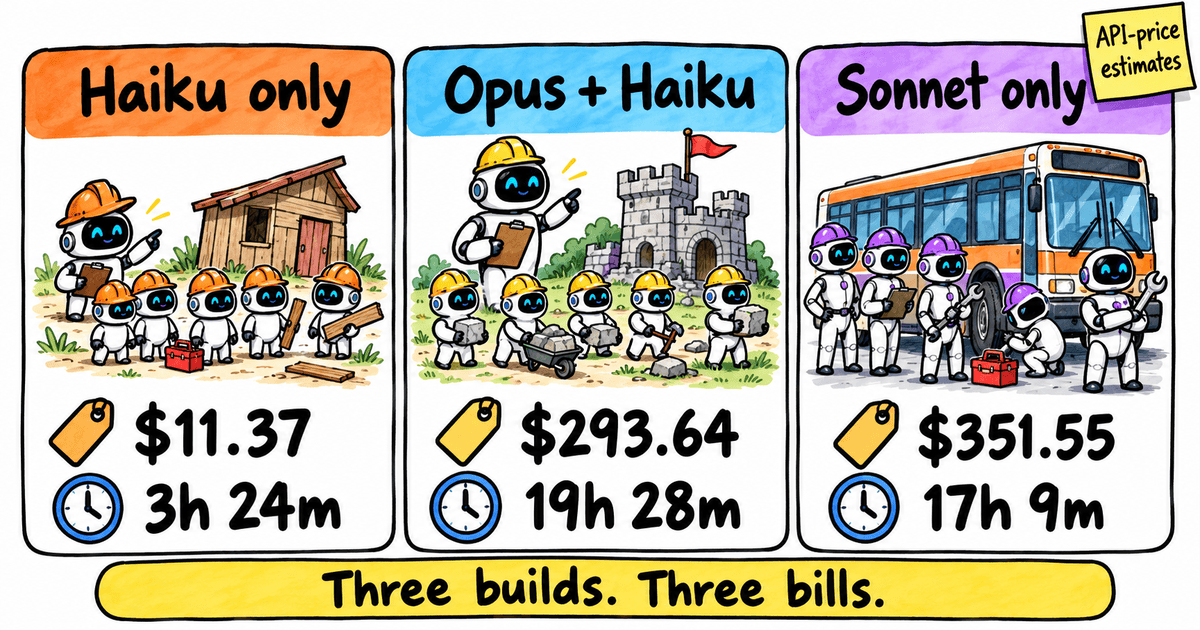
What the numbers say about the Opus + Haiku build:
- About 16% cheaper than the Sonnet-only build (a different game, so treat it as a rough reference)
- Roughly two hours longer than the Sonnet-only build (19h 28m vs 17h 9m)
- 26× the cost, give or take, of the Haiku-only build
Put plainly, the boss-and-workers setup came in under a full Sonnet build and ran a little longer. The jump from the Haiku-only run is the price of going from meh to day-and-night.
Play Metro Bus Simulator if you’re curious what the third bill bought.
One more thing about those dollar figures, because they do look scary.
They’re Claude Code’s estimates of what each run would cost at API prices. I ran all three in Claude Code on the web, on my Max 20x plan, and paid none of it. My monthly bill stayed exactly the same.
So read the numbers as a gauge. They show roughly how much of the plan’s usage each run burned.
If you’re on a subscription too, that’s the useful way to read any cost panel in Claude Code. A bigger number means a bigger bite out of your week.
.
.
.
The Verdict and the Recipe
So, back to the question from the top: can Haiku 5.5 beat Opus 5.5?
Here’s my honest answer. Haiku 5.5 makes a poor boss and a very good worker. On its own, it gave me a cheap, forgettable game, finished fast. Under Opus, it helped build a game I’m proud to share.
The little robot just needed a strong manager.
Here’s the recipe.
Pick Opus 5.5 as the boss. Then add one line to your prompt:
Use ONLY haiku 5.5 for the sub agent.That single line keeps every worker on Haiku. Then split the jobs like this:
| Job | Who does it |
|---|---|
| Planning the work, splitting it into tasks | Opus 5.5 (the boss) |
| Deciding when the result is good enough | Opus 5.5 |
| Exploring a codebase, finding where things live | Haiku 5.5 |
| Implementing a clearly scoped task | Haiku 5.5 |
| Merging and checking the work in a browser | Opus 5.5 |
The steps:
- Pick Opus 5.5 as the main session
- Add the Haiku line to your prompt
- Give each worker its own worktree, so all five can build at once
- Let the boss review the work and send it back until it’s good
Step 4 is where the real value sits. That review loop is the relentlessness Haiku lacks on its own, and it’s the part you’re really paying Opus for.
My guess is that this works best when the job splits cleanly into separate pieces, the way a game splits into art, maps, rules, the computer opponent and the interface. Each worker gets one piece, and the boss holds the whole picture.
Fair warning: this is two runs and a lot of vibes. (Very scientific, I know.) Everything here comes from what I saw on screen, so try it on your own work and see whether it holds up.
Start by playing both games side by side. They’re Claude Artifacts, so they run right in your browser:
- Emberwood Wars: Haiku 5.5 alone
- Tides of Conquest: Opus 5.5 with five Haiku 5.5 workers
👉 Then run the recipe on your next project, and reply with what Haiku 5.5 built for you. I’d love to see what your own crew comes up with once it has a proper boss.

Leave a Comment